Showing posts with label Nissan Leaf. Show all posts

Tuesday, June 14, 2016

EV owners in N.J. would pay $150 more annually, if governor OKs higher gas tax

How this for tortured reasoning? If New Jersey raises the gas tax about 23 cents a gallon to fund the state's transportation network, owners of the Tesla Model S, BMW i3, Nissan Leaf and other EVs would be hit for an extra $150 each year "to offset lost gas-tax revenue," according to news reports.


By VICTOR E. SASSON
EDITOR

New Jersey officials have been sending mixed messages to owners of all-electric cars.

As an incentive, the state waives the 7% sales tax on EV purchases. That's a $5,600 savings on an $80,000 Tesla Model S 60.

And last year, Governor Christie signed a bill that allows Tesla to sell its revolutionary cars directly to consumers.

Now, Democrats and Republicans in the state Legislature are trying to convince the governor to approve a higher gas tax to save the Transportation Trust Fund, which is expected to run out of money in about two weeks.

As part of the deal, the legislative leaders have offered to phase out the state's estate tax in three years, and boost to $75,000 the amount a retiree may exclude from income taxes.

$150 fee on EVs

And EV owners would be required to pay $150 extra every time they renew their registrations "to offset lost gas-tax revenue," The Record of Woodland Park reports today.

New Jersey car owners are required to register annually.

There are about 2,500 EVs among the 5.7 million registered vehicles in New Jersey -- far fewer than in New York State (12,000), Massachusetts (5,500) and even Connecticut (3,000).

The $150 penalty doesn't make sense, given how zero-emission EVs benefit the environment.

In unveiling the Model 3 on March 31, Tesla CEO Elon Musk noted record high carbon-dioxide levels, and said 53,000 people are killed every year by auto emissions.

So, maybe the $150 fee should be levied on any car using gasoline -- not on EVs.


Sunday, March 27, 2016

New York Auto Show: We'll be choking on most of these cars for many years to come

BETTER PLUG-IN: For green-car enthusiasts, tree-huggers and other lovers of the environment, Toyota on Wednesday unveiled the 2017 Prius Prime. The plug-in gas-electric hybrid, above, gets 120 or more MPGe (miles per gallon equivalent); and travels 22 miles and up to 84 mph in electric mode.

EV FROM KOREA: Meanwhile, Korean automaker Hyundai debuted its Ioniq line -- a gas-electric hybrid, a plug-in hybrid and a fully electric sedan, above, all with conventional styling and interiors. Prices weren't given.


By VICTOR E. SASSON
EDITOR

Automakers use the media at big shows in New York and other world capitals to distract consumers from an over reliance on the antiquated internal-combustion engine to snare big profits.

On Wednesday, I walked the floor of the New York International Auto Show in Manhattan for about 5 hours, only to find a couple of new green cars that will go on sale soon.

Instead, Mercedes-Benz, BMW, Audi, Nissan, Maserati and other automakers pitched their cars as the fastest, best-performing on earth -- and to hell with air pollution and climate change.

And the media -- desperate for ad revenue from oil companies, automakers and their legions of greedy dealers -- go along for the ride.


Media negativity

Since Toyota imported its first gas-electric hybrid in 2000, the number of negative, even hostile articles in the enthusiast and general press have numbered in the hundreds.

As they did in 2000, the media continue to virtually ignore the environmental benefit of green cars. 

Even green-car leader Toyota has begun to run Prius ads emphasizing performance, not fuel savings; and certainly never reductions in air pollution, disease and death. 

Tesla's Model S has been on sale since 2012, but the California-based company doesn't advertise.

Nor is it showing its swift and silent all-electric, zero-emissions hatchback at the New York show or crowing about its nationwide network of free-for-life Superchargers.

Instead, Tesla Motors relies on word of mouth, and sells its luxurious four-door hatchback directly to consumers.

That pisses off dealers, publishers, editors, auto writers and bloggers, who enjoy free loans of the cars they are writing about, junkets, and wining and dining at invitation-only events.


BIG QUESTION: General Motors says the 2017 Chevrolet Bolt EV will offer a range of about 200 miles on a full charge when it goes on sale at the end of the year. At the auto show on Wednesday, no executive was available to say whether Bolt buyers will get free charging for life, as do buyers of Tesla's Model S and the new, smaller Model 3, which is to go on sale in California at the end of 2017.

ONE-PEDAL OPERATION: BMW's all-electric i3 got a big head start on General Motors, but has a range of only 81 miles on a full charge. The i3 has been on sale since 2014, and its strong regenerative braking can bring the car to a full stop without use of the brake pedal.


Tesla tops EV sales

Despite media hysteria over how "expensive" a Tesla is, the Model S was the best-selling EV in the United States in 2015 and the first two months of 2016, according to Automotive News.

Its New York Auto Show Preview listed sales for the Nissan Leaf, Tesla Model S (estimates), BMW i3, Fiat 500e, Smart ForTwo EV, and VW e-Golf.

In 2014, the Leaf led the Model S -- 30,200 to 16,550. The i3 sold 6,092 units; 500e, 6,029; and Smart EV, 2,594.

In 2015, the Model S outsold the Leaf, 26,400 to 17, 269. The i3 sold 11,024 units; 500 e, 4,409; and e-Golf, 4,232.

In the first two months of 2016, Model S sales are estimated at 3,200, compared to the Leaf, 1,685; eGolf, 526; i3, 430; and 500e, 412.

Low gasoline prices were cited, but the price per gallon is beginning to rise again. 

See:

Maserati's irresponsible 164-mph SUV

First drive of hydrogen fuel-call car


FOR SPEED FREAKS: Ars Technica dubs the 2017 Nissan GT-R as "Godzilla Redux." Of course, we need this "faster ... supercar slayer" like we need a hole in the ozone layer.


GLOBAL WARMER: Ditto the Ford GT, which will be raced at Le Mans in June after disappointing finishes at Daytona and Sebring. A production model will be limited to 500 units.

TOP-DOWN POLLUTION: Porsche showed a new 718 Boxster that looks a lot like the old Boxster. Imagine how much fun it will be inching up to the tollbooth at the Lincoln Tunnel.

DISTRACTED DRIVING: Yet another new Mercedes-Benz is likely to drive owners crazy with interior controls from hell --dashboard, doors, steering wheel and console jammed with wheels, switches, buttons, a touch screen and even a rear-view camera you can turn off for some insane reason.

JAPAN v. ITALY: A new Mazda MX-5, including one with a targa-style top, is getting some competition from Fiat, below.

FIX IT AGAIN TONY: A performance version of the Fiat 124 Spider, above and below.


BIGGER IS BIGGER: Buick Avista concept.

ROLLING BEDROOM: If this monstrosity from Lincoln ever reaches production, the doors will be conventional, but the three steps will be standard so owners can climb into the land barge. One possible option is a 100-gallon gas tank.

BEST IN BLACK: Look for the new Lincoln Continental in Manhattan's black-car-for-hire fleets and as limousines at an airport near you.

TOYOTA EV: The three-wheel i-Road is a fully electric urban vehicle for two that leans on curves and at corners like a motorcycle, above and below. Toyota hasn't announced production plans.

TWO TO A SPOT: Two i-Roads can be parked side-by-side in a single parking space.

Thursday, January 7, 2016

Even with limited range, EVs are perfect for lifestyle of a group the media ignore

An all-electric car with a range of about 85 miles like the Nissan Leaf or BMW i3 is ideal for many senior citizens, whose driving is limited to food shopping, visits to doctors, volunteering, and driving to senior centers or the gym.


By VICTOR E. SASSON
EDITOR

A huge group of well-to-do Americans greeted the "reveal" of the 2017 Chevrolet Bolt with a yawn on Wednesday.

Retired seniors already have a nice choice of affordable all-electric cars that fit their lifestyle and the limited driving they do, including the Nissan Leaf and BMW i3.

The Bolt, with a range of 200 miles and a starting price of $37,500 before options, will be a little late to the game when it goes on sale at the end of this year or early next year.

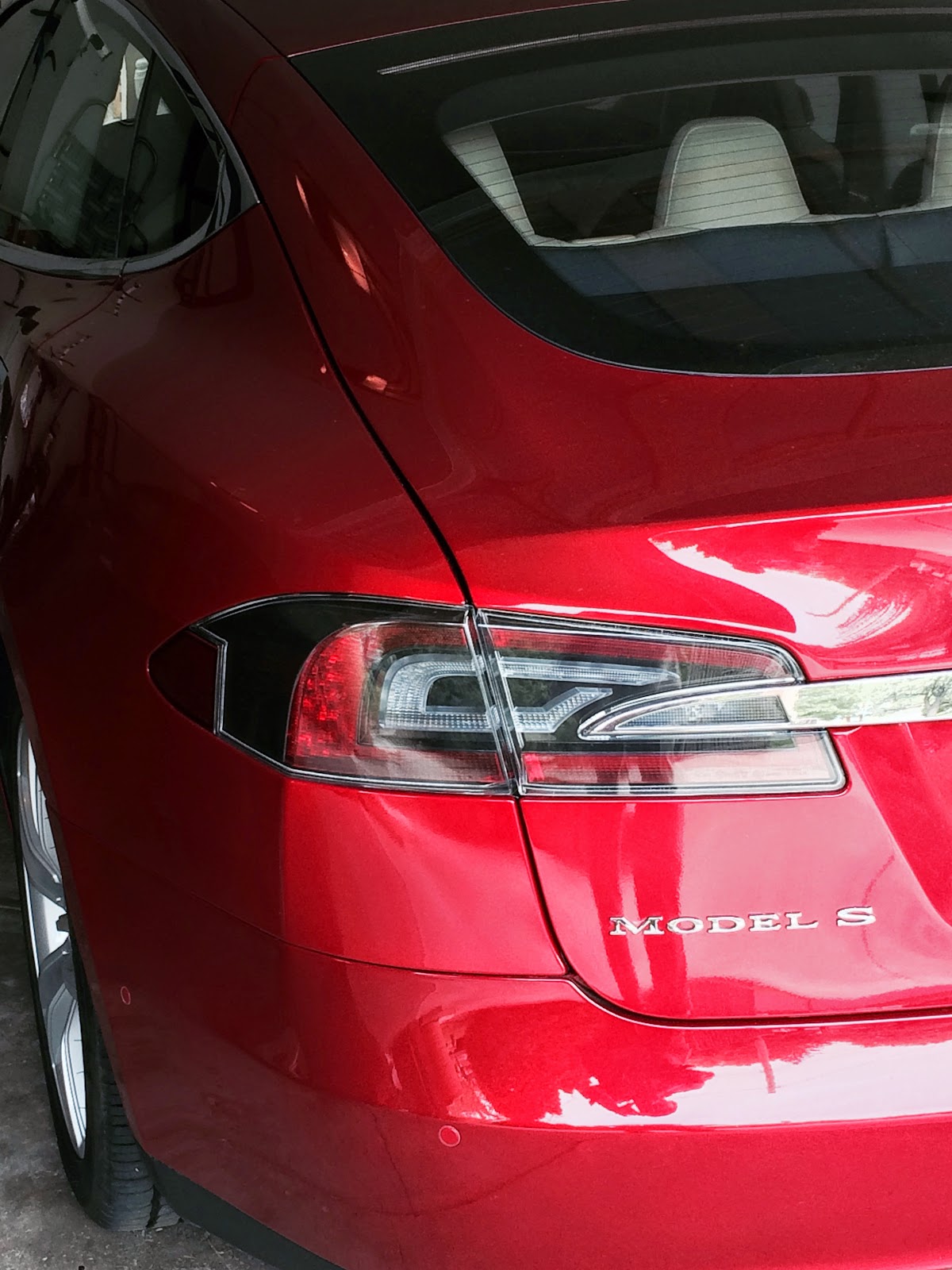
And if an affluent senior wants to reward himself or herself for a lifetime of hard work, they certainly would pick a jazzy red Tesla Model S over the pedestrian-looking Bolt.

That way they could take advantage of a network of free and fast Tesla Superchargers, which Chevrolet hasn't addressed.


The 2017 Chevrolet Bolt four-door hatchback can be mistaken for a lot of economy cars on the road today.

Tax-credit myth

The news media often repeat the claim of General Motors and other automakers that the cost of their plug-in EVs will be reduced by a federal tax credit of up to $7,500.

What they don't say is that you still have to lay out the 40 grand or more before you can apply for the credit in the following tax year.

The minimum tax credit is $2,500 plus $417 for a battery with at least 5 kilowatt hours of capacity, and it goes up $417 for each additional kilowatt hour, according to the Internal Revenue Service.

The Tesla Model S I bought last April has a 60 kilowatt-hour battery, and would qualify for the full $7,500 credit this year.

But if I don't owe the IRS the full $7,500 in taxes, than I'd get a lower credit or none at all.

Many retired seniors don't pay federal taxes so the tax credit is useless to them, and it may prove to be useless to me, too.

Jersey payoff

There is an immediate payoff, if you buy an all-electric car in New Jersey -- you don't have to pay the 7% sales tax.

That's a nice piece of change in your pocket -- $2,800 for an EV that costs $40,000 with options and about $5,600 for a Tesla Model S.

Limited driving

I'm retired and live in northern New Jersey.

On Tuesday, I drove my Model S about 50 miles, including a visit to the gym and supermarket in the morning, lunch at a Japanese restaurant in the afternoon and on an errand in the evening.

On Wednesday, I drove even less, making two stops in Englewood before returning home.

Friday, January 1, 2016

Chevy pulls out phallic symbol in hopes 2016 Volt doesn't flop like earlier model

This image from a Chevrolet Web site shows a male model holding the end of the charging cable for the 2016 Volt, a second-generation plug-in hybrid. The blatant phallic symbol seems to be a desperate move by parent General Motors, and it might make you wonder what the model is doing with his other hand.
With a 240-volt outlet installed at home, the 2016 Volt's battery recharges at a glacial pace -- only 11.7 miles per hour -- compared to more than 30 miles per hour in an all-electric Tesla Model S. What would a Volt owner do on the road, stay in a hotel overnight?


By VICTOR E. SASSON
EDITOR

The first-generation Chevrolet Volt plug-in hybrid had the longest battery range in the industry, yet only 100,000 units were sold worldwide in 2010-15.

Chevrolet is hoping to avoid a similar debacle with the 2016 Volt, displaying a phallic symbol on its official site, and exaggerating improvements in the second-generation gas-electric car.

Now, the Volt has an all-electric range of 53 miles, but after that you'll have to rely on fossil fuel, aggravating air pollution and climate change.

Still, General Motors says "Chevy expects owners to go more than 1,000 miles between fill-ups by charging regularly."

How much that electricity costs isn't mentioned, though Chevy says the car can be programmed to take advantage of off-peak electric rates.


This smells

No such off-peak rates are available to homeowners in New Jersey, and I would expect the same is the case in many other states.

Referring to its 1.5-liter gasoline engine, Chevy calls the Volt "an electric car with a back-up plan."

Chevy's seeming desperation leads some observers to wonder whether the new Volt's high price will result in as big of a flop as the old model.

The 2016 Volt is available in LT trim at an MSRP of $33,170 and the Premier is $37,520 (before tax, title, license and dealer fees).


Bolt price rises

The automaker's all-electric Bolt still is nearly a year away from going on sale, yet Chevy already has revised the expected price to "under $40,000" from a starting price of $30,000.

Nissan is the sales leader when it comes to all-electric cars, and even BMW, a relatively small carmaker, started selling a purely electric car last year.

See: An electric car in name only

Friday, June 12, 2015

Cordless EV charging sounds sexy, but its slow pace is likely to put you fast alseep

No other manufacturer has come up with EV charging to compete with the speed of Tesla Motors' network of free Superchargers, which now allow you to drive across country or from New York to Florida.


By VICTOR E. SASSON
EDITOR

I got an email about the Plugless charging system for electrical vehicles, and watched a video showing a Nissan Leaf being driven into a garage.

The Leaf drove over something on the floor of the garage -- just inside the door -- and there was another gizmo on the wall.

Gee, I thought, why don't I have that for my Tesla Model S?

Cause, the company, Evatran, doesn't make one yet for the Model S.

Plus, it's slow, taking 6 to 8 hours to fully charge a Leaf, which only has a range of 84 miles.

The system for the Leaf costs about $1,900.

Later in 2015, the company says, it plans to release a Leaf system rated at 6.6kW, double the current 3.3kW.

With a special 240-volt outlet in my garage, my Model S 60, with a range of 208 miles, is fully charged in about 7 hours (29 miles an hour).

And I can program the car to begin charging at midnight, allowing me to take advantage of lower electric rates.


Thursday, June 4, 2015

Tesla easily swallows long distances, but not BMW i3, Leaf and other small EVs

Tesla Motors Superchargers at a showroom and service center on Route 17 north in Paramus, N.J. Going north, the next Superchargers are in a shopping center outside Albany, N.Y., about 135 miles away, well within the range of a Model S, below.


By VICTOR E. SASSON
EDITOR

3.5 hours.

That's how long it takes to achieve a full charge on the all-electric version of the BMW i3.

Then, 81 miles later, you'd have to spend another 3.5 hours recharging the German car.

The i3 is best suited for urban and suburban driving.

On a long trip, its limited range is crippling.

The same goes for the Nissan Leaf, Mercedes-Benz B Class and every other EV except the Tesla Model S.

The Model S -- the only electric with a range of more than 200 miles -- also benefits from a network of exclusive Tesla Superchargers that already allows you to drive across the country and from New York to Miami.

And recharging is free and fast -- about 30 minutes for a range of 170 miles or enough to reach the next Supercharger, and take coffee and bathroom breaks.


Montreal or bust

Later this month, I will be driving my Model S about 350 miles to the International Jazz Festival in Montreal, Canada.

Leaving my home in Hackensack, N.J., my first stop is Colonie, N.Y., an Albany suburb, where 30 minutes hooked up to one of six Tesla Superchargers will give me enough range to reach my second stop.

Tesla doesn't yet have a Supercharger between Colonie and Montreal.

I could go out of my way to use Superchargers in Utica, N.Y., and Ontario, Canada.

Instead, I'll head for standard electric car chargers at the Basin Harbor Club, a resort on Lake Champlain in Vermont.

We'll stop for lunch and a boat ride on the lake, because I'll need two to three hours to recharge the Model S for the final leg of the trip.

Montreal has a Tesla dealer with two Superchargers available 24/7.


Wednesday, May 13, 2015

Dilemma facing world's big automakers: How to make old technology seem fresh

The wildly overpriced BMW i8, a plug-in hybrid that uses gasoline, was one of the most popular cars on Tuesday at the annual Spring Brake in Bear Mountain State Park, below. Despite the word "brake" in the event title, some members of the International Motor Press Association received speeding tickets from uniformed park police in marked vehicles.

Audi and Porsche were among the automakers that were conspicuously absent. About 20 others -- from Acura to Volkswagen -- did provide vehicles for the ride-and-drive event on twisting two-lane park roads and nearby highways.


By VICTOR E. SASSON
EDITOR

Aren't you sick of watching all those stupid car commercials on TV every night?

New cars being driven at insane speeds on empty roads or within inches of a male model shouting to be heard over the roar of passing vehicles are experiences so far removed from the challenge of owning a car in the congested metropolitan area.

Did you see the idiotic one showing a Lexus cutting off competing Mercedes-Benz and BMW models in the dessert as it traces the logo of Toyota's luxury brand? 

I saw that commercial again on Tuesday night after returning from an event for auto writers at Bear Mountain State Park, where I got a chance to drive the 2015 Lexus RC-F Coupe, which has a sticker price of $77,720.

It's fast, of course, with a 467-horsepower V-8 that gets only 16 mpg city, and growls through loud performance mufflers.


Lexus v. Tesla

The Lexus costs almost as much as the car I drove to Bear Mountain, my 2015 Tesla Model S, an all-electric luxury hatchback that is an oasis of calm in our noisy world.

But -- like all but one of the cars I tried out -- the Lexus coupe is basically 19th century internal-combustion engine technology disguised as something fresh and new.

Just another dinosaur dressed in couture to join the herd of smelly, noisy cars and SUVs that are destroying the environment and our health.

That Lexus coupe has the same 16 mpg and 25 mpg city/highway fuel-economy rating as the 2015 Dodge Charger R/T Road & Track, which has a V-8 Hemi engine and a sticker of just under $44,000.

Another thirsty car was the big Mercedes-Benz S63 AMG Coupe, powered by a 5.5-liter V-8 with 577 horsepower, described on the company Web site as a "beast that is truly a thing of beauty."

Only one EV

Only Nissan brought an all-electric car, the best-selling Leaf, a quiet, zero-emission wonder that clashed with the Japanese carmaker's gas-guzzling SUVs at the event, including a new Murano and the hulking Infiniti Q80, which is about the size of a minibus.

And there was a long wait to drive Nissan's fearsome GT-R, a four-wheel-drive coupe with an MSRP of $103,000-plus.

So far, at two events for auto writers, I have yet to see Mercedes' green cars -- the all-electric B-Class, which starts at $41,450, or the German automaker's S550 Plug-In Hybrid Sedan, which has an MSRP of $94,400.


'Rock concert' mufflers

You should have heard the mufflers on the BMW M4 Convertible I drove over two-lane roads and on the Palisades Interstate Parkway.

Another participant said the old M4's mufflers sounded like a "symphony," but the new ones are definitely a "rock concert."

Just what we need: A sophisticated, four-wheel version of all those noisy Harley-Davidson motorcycles that disturb us day and night.


American-made performance cars, such as this Chevrolet Corvette, seem cheaply made and unsophisticated when compared to similar European and Japanese models. 


Crude Mustang GT

My second car was a 1966 Mustang GT with a small V-8 engine, a 4-speed manual transmission and what Ford called a fastback, with fold-down rear seats and a pass-through hatch to the small trunk.

It was red, and I kept it for 13 years, even though a rear fender rusted through and I had to replace the water pump several times.

On Tuesday, I drove the boxy 2015 Ford GT Convertible, which seemed heavy and slow compared to competitive cars.

It also seemed cheap: The driver's seat could be adjusted electrically, but you had to use a manual lever to move the seat back.

On two-lane park roads, the performance seemed anemic, compared to all the noise it was making, reminding me of the automaker's stock.

I guess I shouldn't have expected much from the 2015 Mustang after a Ford-provided "breakfast" of coffee, tea, muffins and pastries.

No juice, yogurt or eggs were available.


Not even cat and mouse

New York State Park Police were assigned to the IMPA event, as they have been for the five years it has been held at Bear Mountain.

On Tuesday, there were usually two marked cruisers and uniformed officers in the parking lot that held the new cars, and others deployed on park roads.

This morning, police would not say how many speeding tickets were issued to IMPA members and other park goers on Tuesday.

But at least one auto writer was observed driving a performance car at more than 100 mph on a two-lane park road.


Monday, January 12, 2015

How can Chevrolet sell an electric car with a 200-mile range for less than the Volt?

The Chevrolet Bolt EV Concept has an ambiguous name to go along with an ambiguous production date. Many auto writers are reporting it will be available as a 2017 model with a 200-mile range, but haven't you seen many concepts that never lived up to the splash they made at the auto show? 


By VICTOR E. SASSON
EDITOR

A bolt is a fastener.

Now, Chevrolet is calling an all-electric concept with a 200-mile range a Bolt, which rhymes with Volt, the plug-in hybrid with a limited EV range it has been selling since December 2010.

A new Volt is to be unveiled today at the auto show in Detroit.

The official press release calls the 4-door Bolt "a vision for an affordable, long-range all-electric vehicle designed to offer more than 200 mile of range starting around $30,000."

Chevrolet officials haven't explained how the Bolt can be sold in two years for thousands of dollars less than the current Volt, which has an MSRP of $34,345.

In what appears to be a shot at Tesla's Model S, a 4-door luxury hatchback that starts at $69,900, General Motors CEO Mary Barra said the Bolt EV is "designed for attainability, not exclusivity."

The Bolt concept reminds some viewers of the more expensive BMW i3, which is available both as an EV and as a plug-in hybrid.

The i3, in turn, seems to have several styling cues that recall the Honda Passport.


200-mile range?

If the 2017 Bolt does achieve a range of 200 miles or more, it would be the first production car to come near the 208-mile range of the base Tesla Model S 60.

Now, several EVs claim to have a range of about 85 miles, including the Nissan Leaf, Mercedes-Benz B-Class and BMW's i3.


Tuesday, December 9, 2014

Besides Tesla owners, who else would definitely buy their current car again?

The highest percentage of drivers who would definitely buy their car again own the all-electric Tesla Model S, according to Consumer Reports annual Owner Satisfaction Survey.


By VICTOR E. SASSON
EDITOR

Consumer Reports lists 22 hybrid or electric cars in its annual Owner Satisfaction Survey.

When asked, "Would you buy your car again," 98 percent of Tesla Model S owners delivered an emphatic "yes."

The next highest percentage are owners of the Chevrolet Volt, a plug-in hybrid, and Honda Accord Hybrid, both at 85 percent.

They are followed by the Ford Fusion Energi, 84 percent; Toyota Prius, 82 percent; Lexus ES 300h Hybrid, 81 percent; and Toyota Avalon Hybrid, 80 percent.

Only 77 percent of Nissan Leaf owners would buy the all-electric car again, according to the Consumer Reports survey, published in the January 2015 issue.

The lowest percentage of drivers who would be repeat buyers own the Kia Optima Hybrid, at 56 percent.

The best three sedans are listed as the Tesla Model S (98), Mercedes-Benz E250 BlueTec (88) and a second diesel, the BMW 328d (86).

"Tesla Motors has built a rabid following since the car's 2012 launch, reflected in 98 percent of owners saying they would definitely purchase it again," the magazine reports.

"Not only is the Tesla roomy, comfortable and a lot of fun to drive, but it also has low operating costs -- returning the equivalent of 84 mpg."


Electric v. fuel cell

Some auto writers are so eager to knock the Model S off of its perch, they are comparing the four-door luxury hatchback to a plug-in hybrid sports car from BMW and the Toyota Mirai, a smaller fuel-cell sedan that won't be available in the U.S. until 2016.

Toyota will produce only 700 fuel-cell cars in the first year, so it is unlikely anyone who manages to buy one in the United States will pay anything close to the MSRP of $57,500.


Tuesday, November 4, 2014

Everyone now: What would an 'affordable' all-electric car look like and cost?

Despite the strides made by hybrids and all-electric cars or EVs in the past 14 years, the American road is still dominated by SUVs, which waste gasoline and pollute the air. How many times have you seen only a driver in one of these monstrosities?


By VICTOR E. SASSON
EDITOR

Call it the "game changer" or the "sweet spot."

An affordable all-electric car could finally pose a challenge to the dominance of the infernal combustion engine, one of the chief causes of climate change.

But two things would have to happen:

The car would have to start at $40,000 and offer a minimum range of 200 miles.

I'm flexible, though, after looking at the BMW i3, which the German automaker says has a real-world range of 80-100 miles or 160-180 miles with a "Range Extender," a 2-cylinder gasoline engine that recharges the battery.


The base model of the BMW i3, called Mega World, has an MSRP of $42,500.


Even without the Range Extender, the BMWi3 equals or exceeds the range of two cheaper all-electric cars, the Nissan Leaf (84 miles) and Ford Focus Electric (76 miles).

The B Class Electric Drive from Mercedes-Benz has a range of up to 85 miles and an MSRP of $33,950, according to the company's Web site.

The B Class was developed in partnership with California-based Tesla Motors, which makes the car's electric drive system.

Tesla also helped develop Toyota's RAV4 EV, which has a range of 100 miles, but that vehicle is available only in California.

Park Avenue BMW in Maywood has offered me an extended test drive of the i3.


A smaller Tesla

A friend who visited the Tesla showroom in Paramus says she was told a smaller model of the revolutionary all-electric car will be coming out in a year or two.

Would a smaller car have a smaller battery and less range than the Model S with a 60 kWh battery, an advertised range of 208 miles and an MSRP of $69,900?

Tesla is building its own battery factory in Nevada, and that is expected to lower retail costs.

Could Tesla actually produce a smaller all-electric vehicle starting at $40,000?


The Tesla badge on a Model S.